I had another article published in the Journal of New Brunswick Studies last week in an issue also honouring Bill Parenteau and Elizabeth Mancke and their many contributions to the field of New Brunswick Studies. My article begins with a section that thinks about Perley in the context of Bill’s work — and when I re-read this piece last week, I could remember the moments that Elizabeth and I argued about along with the parts where she nodded along.
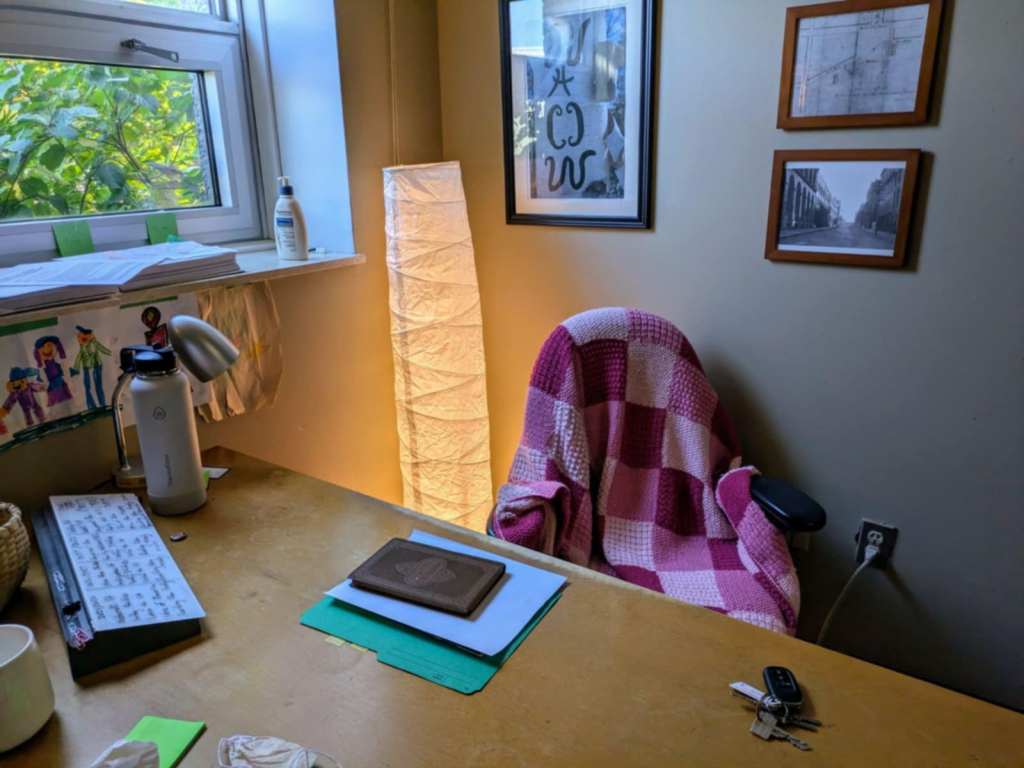
After Elizabeth passed last fall, her Toyota was sold to a brilliant Wolastoqey scholar/educator who is also a dear friend. There was an old, worn out blanket inside, so my talented friend mended it and gave it to me as a gift just a few weeks ago. I keep it draped over my office chair now so I can wrap it around my shoulders when I need to.
And things go on. I revisited and published this article as part of my prep for a class I’m creating for next year on “reading through treaty.” How do settler writers, like Perley but also contemporary writers, create and normalize worlds that exist in contravention of the Peace and Friendship Treaties? How can reading these texts with an awareness of power draw students into the urgent work of restoring our treaty order?
With deep gratitude for my teachers.
“Storytelling is a fight for the future… [and] it is up to us to write a story worth living.” — Kelly Hayes, “Remaking the World”
 Rachel Bryant